
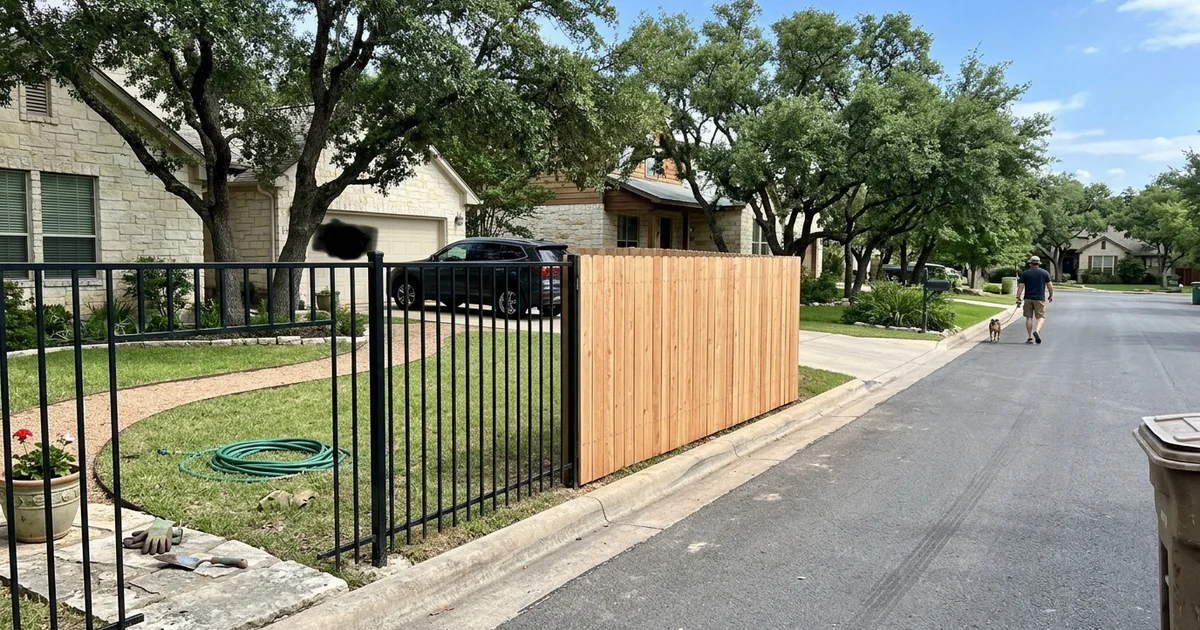
Wrought iron or wood usually comes down to one question: do you want to see out, or keep people from seeing in? Both are common around Boerne. Iron keeps the view open and costs more. Wood gives you privacy for less.
If you're leaning toward metal, our wrought iron fences page covers styles, pool enclosures and repairs. Here's how a wrought iron vs wood fence compares on cost, upkeep and looks.
The Short Version
Iron keeps the view open and, with upkeep, lasts a long time. A wood fence gives you solid privacy for a lower price.
At our prices, 150 feet of 6 ft wood privacy fence runs $3,750 to $6,750, and the same run in wrought iron or ornamental steel runs $6,000 to $11,250. Iron runs $40 to $75 per foot installed, and a 6 ft wood privacy fence runs $25 to $45. Which one is right depends on what you need the fence to do.
Iron vs Wood Side by Side
Here's the iron vs wood fence cost and upkeep side by side:
| Factor | Wrought iron / ornamental steel | Wood privacy (6 ft) |
|---|---|---|
| Installed price | $40 to $75 per foot | $25 to $45 per foot |
| Privacy | Open; you see through it | Solid; blocks the view |
| Views | Keeps the landscape visible | Hides what is behind it |
| Upkeep | Repaint when the finish wears; treat rust spots | Clean and restain every few years |
| Lifespan | Can last decades with upkeep | Shorter; posts and pickets wear out |
| Wind load | Wind passes through easily | Catches wind like a sail |
| Best places | Front yards, estates, pools | Backyards, side yards |
Privacy vs Views
This is usually the deciding question. If you want to stop seeing the neighbor's patio, iron won't help. A solid wood privacy fence blocks the view completely. That's the point in a backyard, and the problem if you have a Hill Country view you don't want to lose.
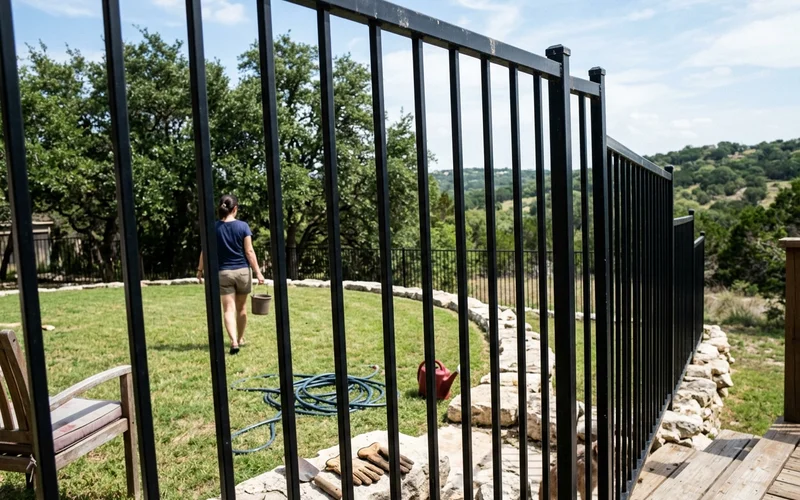
Iron marks the property line and keeps pets and people where they belong without closing the space in. That's why you see it so often along estate frontage and front yards.
Upkeep: Paint vs Stain
Iron doesn't rot, but it will rust where the finish breaks down, usually at the welds and joints first. Catch rust early. Fixing a rust spot takes three steps:
- Wire-brush off the flaking metal.
- Put on a rust-inhibiting primer.
- Paint over it to seal the repair.
Wood grays and cracks in Texas sun unless it's stained. Restaining every few years keeps the boards in good shape, and staining a 6 ft fence runs $3 to $8 per foot for one side. Even with good care, a wood fence eventually needs new pickets, rails and posts.
Lifespan and Long-Term Cost
Iron costs more on day one. Over a long stretch the gap narrows, because iron skips the replacement cycle wood goes through. A wrought iron fence lifespan is long if rust spots are caught early and the finish is kept up. If it's a fence you plan to live with for a long time, that's what the higher price buys.
The Impact of Wood Species
A well-built wood fence, with posts set properly in concrete, still lasts a good while. The wood you pick matters:
- Cedar: natural oils resist rot and insects, so it usually outlasts pine.
- Treated pine: costs less and holds up well, but tends to wear out sooner.
- Choosing between them: see cedar vs pine.
Wind and Rock
A solid wood fence catches wind like a sail, which puts a lot of strain on its posts. That's why posts for a wood privacy fence need to go deep, 24 to 36 inches, and get drilled into the limestone where the hole hits rock.
Iron lets wind pass right through the pickets, so it puts much less load on its posts. Both still need solid concrete footings to stay straight and keep gates swinging true.
The Common Answer: Use Both
A lot of properties use both: iron in front and a wood fence in back.
- Front yard and frontage: Iron keeps the house visible and the property looking finished from the road.
- Backyard and side lines: Wood privacy ensures the space you live in stays completely private.
- Pool areas: Iron is standard, fitted with self-closing and self-latching gates.
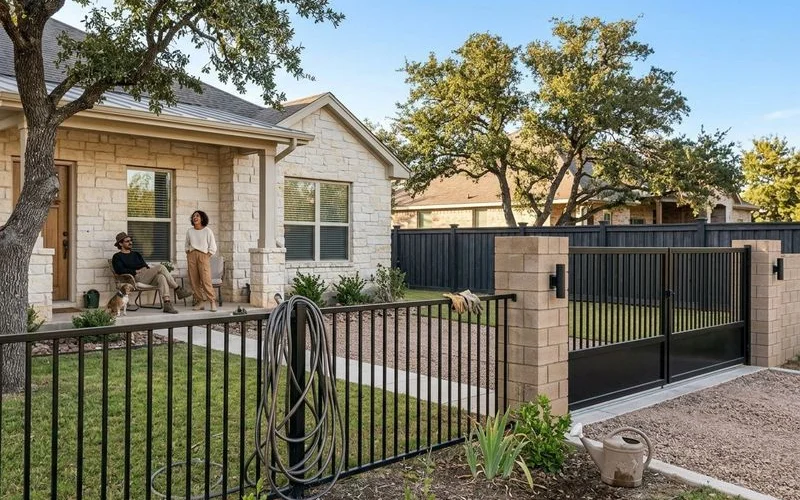
Meeting Pool Code Requirements
Pool fences have their own rules for height, the gaps between pickets, and how the gate closes and latches. We check what applies to your property, from the city and your HOA, before we dig, and we fit pool gates with self-closing, self-latching hardware.
A Quick Cost Example
On a typical 150-foot run, here's the iron vs wood fence cost difference:
| Material Type | Estimated Cost for 150 Feet |
|---|---|
| Wood Privacy (6 ft) | $3,750 to $6,750 |
| Wrought Iron / Steel | $6,000 to $11,250 |
If iron is over budget but you want the open look, you have alternative options. Black vinyl-coated chain link runs $12 to $30 per foot, while a welded pipe fence at $20 to $45 per foot gets you there for less.
What About HOA Rules?
In a lot of Boerne neighborhoods, the HOA has a say in what you can build. Some limit how tall a front-yard fence can be, some want an open style like iron out front, and some only allow a wood fence behind the front of the house. Read your rules before you buy anything.
Inside city limits, the project also needs a permit application and a site plan, whichever material you choose.
Wrought Iron vs Wood Fence: Which Should You Pick?
- Pick iron for front yards, estates, pools and anywhere you want to keep the view open.
- Pick wood for backyards and anywhere privacy matters most.
- Pick both if you want each one where it counts.
Choosing between a wrought iron vs wood fence comes down to the view, the privacy, and the upkeep you're willing to do. We'll come out, measure, and give you a free estimate for either one, or both.