
The Short Answer
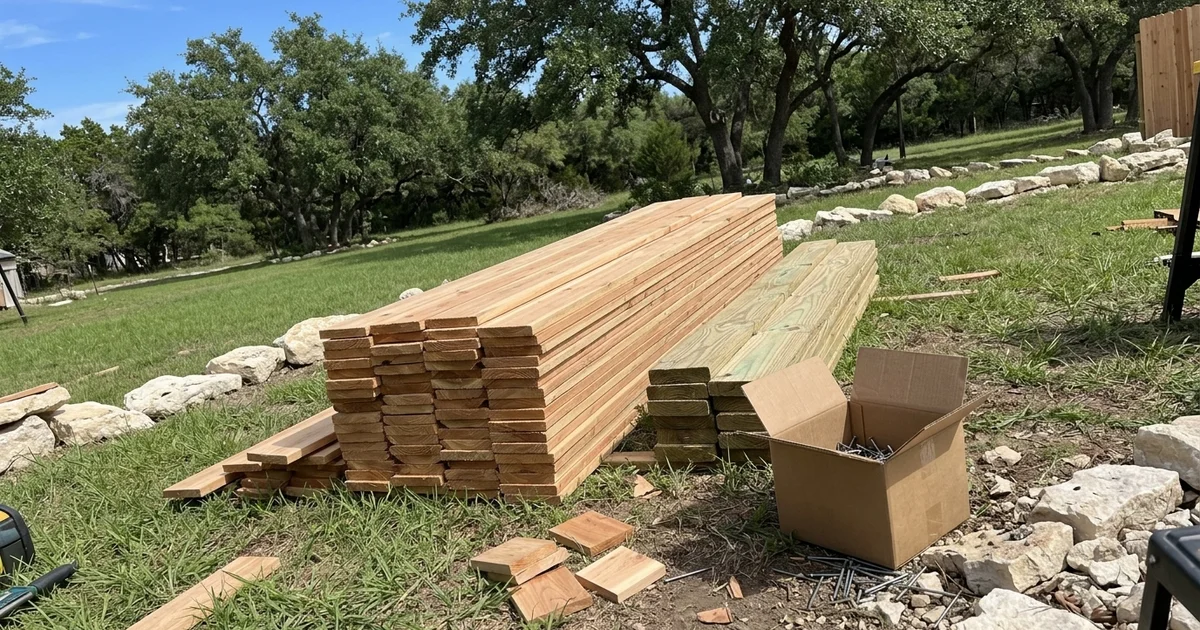
Cedar or pine is one of the first questions people ask. The best wood for a fence in Texas is usually cedar if you want it to stay straight and last, and pine if the budget comes first.
As wood fence builders in Boerne, we build with both. Cedar handles Texas sun and moisture better and moves less as it dries. Both fall in the same $25 to $45 per foot range for a 6 ft privacy fence, with cedar toward the top and pine toward the bottom.
Cedar vs Pine Side by Side
Here's how cedar vs pine compares on the things that matter in Texas:
| Factor | Cedar | Treated pine |
|---|---|---|
| Texas Lifespan | Usually lasts longer | Usually shorter |
| Rot Resistance | Natural oils resist decay | Pressure-treated with preservatives |
| Movement in Heat | Stays flatter | More likely to cup and twist as it dries |
| Upfront Cost (6 ft) | $25 to $45 per foot (upper part of the range) | $25 to $45 per foot (lower part of the range) |
| Stain Wait Time | Usually ready sooner | Needs more drying time |
| Maintenance Need | Restain every few years | Restain every few years; watch for twisting |
Rot Resistance
Cedar has natural oils that help it resist rot and insects without any treatment. Pine has to be pressure-treated to last outside in Texas. Today's treated pine uses copper-based preservatives to hold off decay. Untreated pine in the ground doesn't last long.
If you're buying treated pine for posts, check the tag. Anything going in the ground should be rated for ground contact, not just above-ground use.
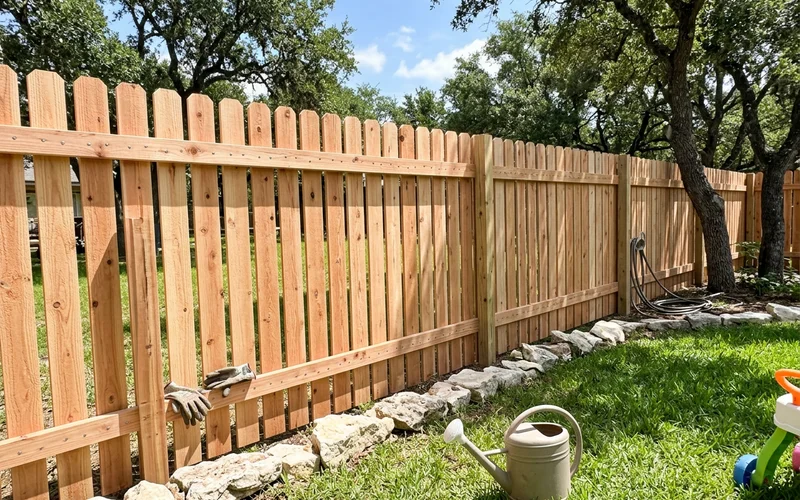
A lot of fences use both: treated pine where the wood touches the ground, and cedar for the pickets you see.
Movement in Texas Sun
Texas summers are hard on lumber. Wood swells when it takes on water and shrinks when it dries, and in Hill Country heat that cycle can loosen the fasteners in the rails.
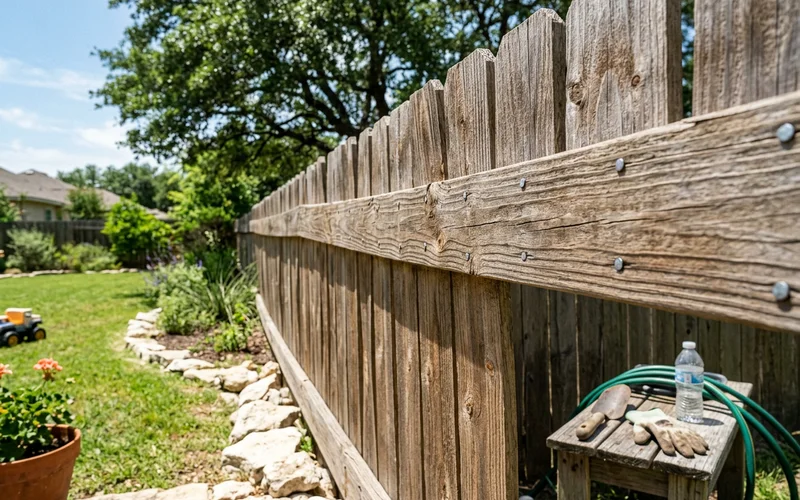
Treated pine usually comes from the lumberyard wet with preservative, so it dries out after it goes up and is more likely to cup and twist as it does. Cedar starts out drier and stays flatter. It's common to see a pine fence gone a little wavy after a few years.
Which Parts of the Fence Matter Most?
Not every part of the fence has to be the same wood.
- Posts: These carry the load and sit in the ground or in concrete, so they need to be treated pine rated for ground contact, or galvanized steel.
- Rails: Horizontal 2x4 rails hold the vertical pickets perfectly flat. They need to stay straight and strong to prevent a wavy fence line.
- Pickets: These boards are the only part you actually look at every day. Flatness and visual appeal matter most for this outer layer.
A common approach is treated posts and rails with cedar pickets on the side people see. You get the cedar look for less than an all-cedar privacy fence.
Staining Cedar vs Pine
Both woods turn gray in the sun if they're left bare, and both are worth staining. Cedar is usually ready for stain soon after it goes up. Treated pine needs more drying time first. If it's stained too soon, the stain sits on top and peels.
The Water Bead Test: Drop a small amount of water on your new pine fence. If the water beads up on the surface, the wood is still too wet to stain. If it immediately soaks in, you are ready to apply your finish.
Our guide on whether staining is worth it covers cost and timing. Staining a 6 ft privacy fence runs $3 to $8 per foot for one side.
What About Cost?
Pine is the cheaper place to start, and cedar costs more. A 6 ft privacy fence runs $25 to $45 per foot installed, with pine toward the low end and cedar toward the high end:
- 100 ft: $2,500 to $4,500
- 150 ft: $3,750 to $6,750
- 200 ft: $5,000 to $9,000
Board-on-board and 8 ft cedar fences run $35 to $60 per foot. Our fence cost per foot guide covers every other style and height.
How Long Does Each Wood Last?
How long a wood fence lasts in Texas depends more on how it's built and kept up than on the wood alone, though cedar usually outlasts pine. These matter most:
- Post setting: Posts set 24 to 36 inches deep in concrete will outlast everything else on the structure. They must be drilled straight into rock where needed.
- Ground contact: Pickets touching the wet dirt will wick up moisture and rot quickly. Adding a rot-resistant kickboard keeps your main pickets safely off the ground.
- Staining routine: Restaining every few years keeps the boards from drying out and cracking, on either wood.
- Fasteners: Hot-dipped galvanized or stainless steel fasteners hold tight without rusting. Cheap screws will quickly streak your new boards with ugly black stains.
A well-built cedar fence that's kept stained will look good for a long time. A pine fence will serve you well too, though expect a little more twisting. A poorly built fence of either wood won't last, no matter what it cost.
Which Should You Pick?
Cedar is the best wood for a fence in Texas if you care most about how it looks and how long it lasts. Pine wins if the price comes first.
- Pick cedar if the fence is in full view from the street. It stays flatter, and it's worth it if you plan to keep the house a long time.
- Pick pine if your budget comes first, or for side yards and back lines where looks matter less.
- Mix them if you want the cedar look where it counts for less overall: treated pine for the posts and rails, cedar for the pickets.
Whichever wood you choose, the posts decide how long it stands. In Boerne's stony ground, that means drilling into the rock and setting the posts in concrete. When you're ready to settle cedar vs pine for your own fence, we'll come out, measure, and give you a free estimate for either one.