- Cedar and pine
- 6 ft and 8 ft privacy heights
- Board-on-board, horizontal and cap-and-trim styles
- Full replacement, including tear-out and haul-off
- Gates built to match
What Goes Into a Wood Privacy Fence?
A wood fence is posts, rails and pickets. How well those go together is what keeps it looking good for a long time. The posts are covered further down, under building on rock and slope. Here's the rest.
The rails
On most 6 ft fences we run three 2x4 rails between the posts. That third rail keeps the pickets flat and helps the fence hold its shape between posts as it ages.
Pickets and fasteners
You can go with cedar or treated pine pickets, and dog-ear pickets are the classic backyard look. We put them up with galvanized or stainless fasteners, because regular nails react with cedar and leave dark streaks down the boards.
The kickboard
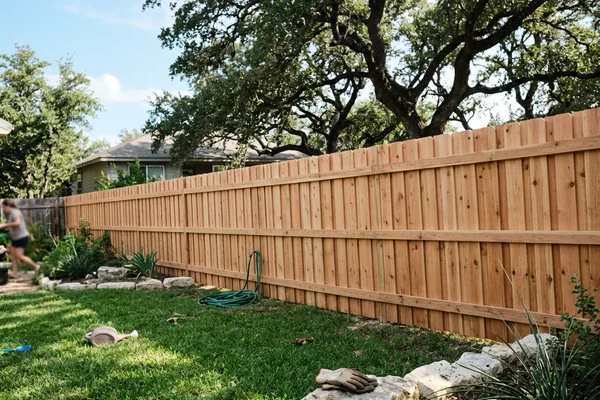
A kickboard, sometimes called a rot board, runs along the bottom of the fence. It keeps the pickets up off the dirt and grass, where they'd soak up water, and it takes the hits from the weed trimmer. We recommend one on every new wood fence. When it finally wears out, replacing one board costs a lot less than replacing a row of pickets.
Cedar or Pine?
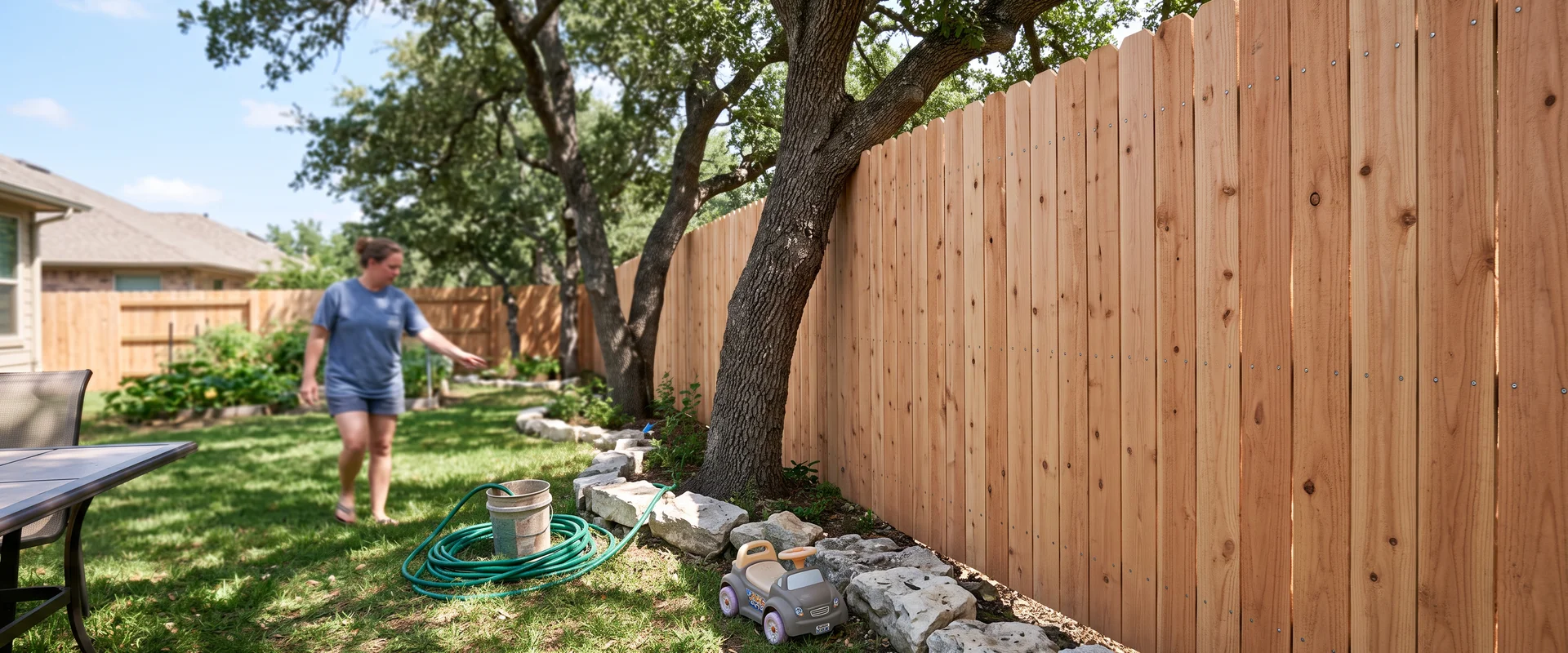
A cedar fence and a treated pine fence both hold up well, and for a 6 ft privacy fence they fall in the same price range. Cedar handles Texas sun and moisture better and moves less as it dries, so it tends to stay straighter. Treated pine costs a little less up front and takes stain well once it's had time to dry out.
A lot of people split the difference, with cedar pickets on the side they look at most and treated pine posts and rails behind them. Our guide to cedar vs pine for a Texas fence goes through the trade-offs part by part.
Which Style Fits Your Yard?
Most of it comes down to how much privacy you want and what you'd like to spend. Here are the four main styles.
- Standard privacy. Pickets sit side by side on one side of the rails. It's the most common build and the least expensive, though small gaps can open up as the wood dries.
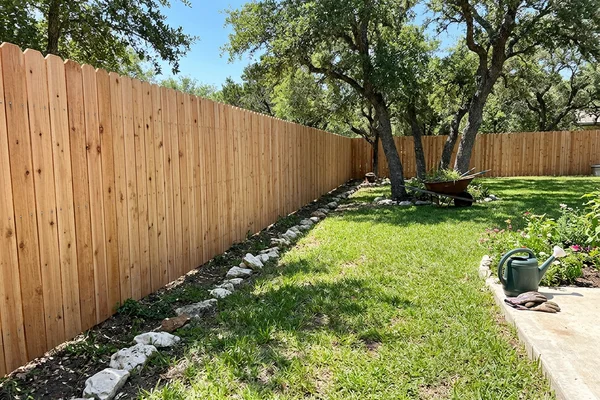
- Board-on-board. Pickets overlap by about an inch on both sides of the rails, so you won't see gaps even after the wood shrinks, and it looks finished from both yards.
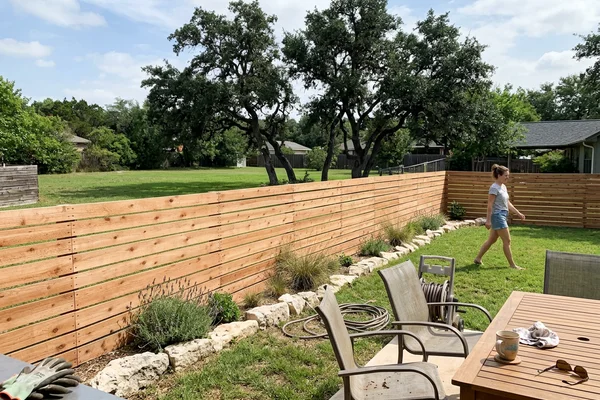
- Horizontal slat. Boards run sideways with small, even gaps, about a quarter to a half inch. It's a cleaner, more modern look that suits a patio or pool area.
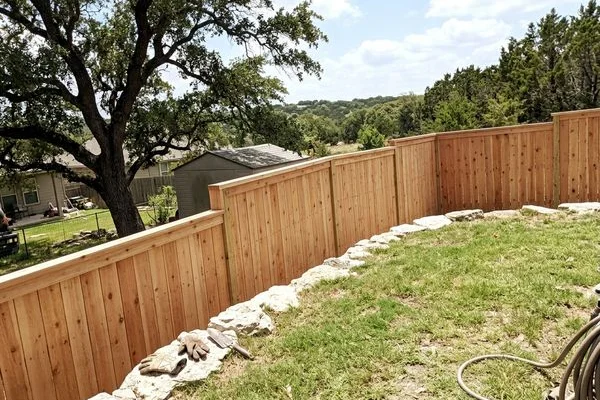
- Cap and trim. A cap and a trim board finish off the top of the fence. The cap keeps rain off the ends of the pickets, and the whole fence looks more finished.
Any of these can go up to 8 ft if you want more screening, say along a busy road or next to a two-story house. Inside city limits, we'll check the height against the permit before we build.
Replacing an Old Wood Fence
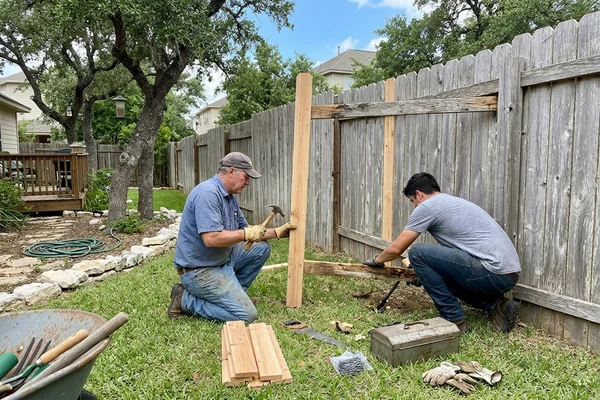
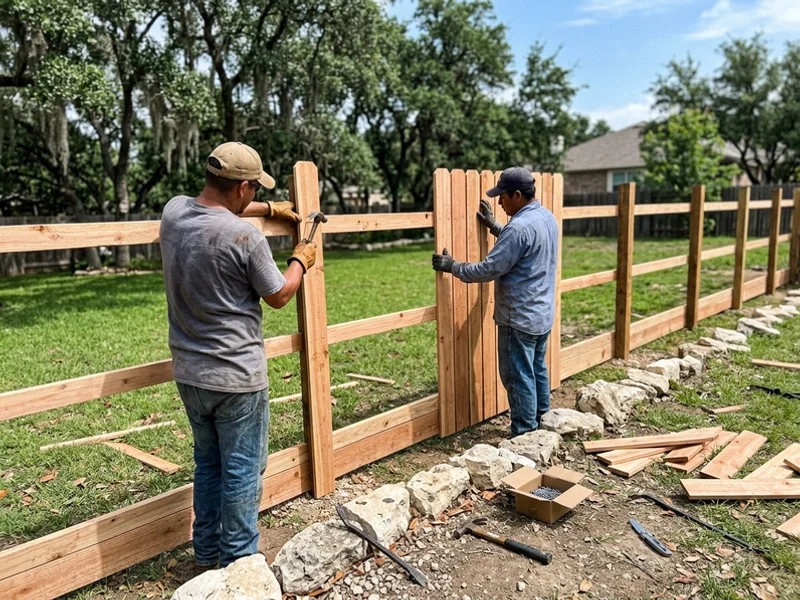
When it's time for a new fence, we take care of the whole job, including tearing out the old one and hauling it off.
It's usually time when several posts have rotted at the ground, the pickets crumble when you push on them, or the whole fence leans more than a brace can fix.
If you're not sure yours has reached that point, we'll tell you whether replacing a few posts would get you more years out of it. Our fence repair page has more on that, and the fence cost per foot guide compares wood with every other type of fence we build.
Gates and Finish
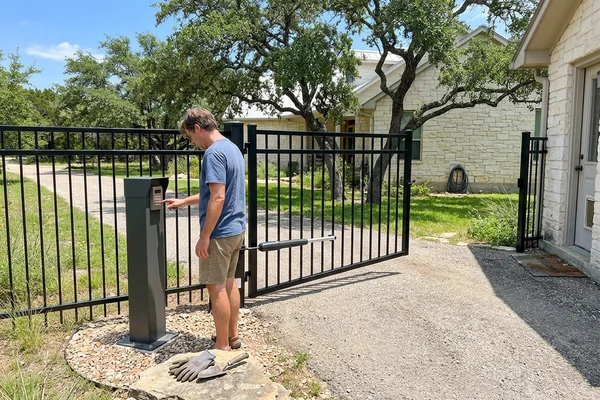
We build walk gates and drive gates to match the fence. Gates get more use than any other part of it, so their posts go deeper and we use heavier posts there, which helps the gate stay square. If you want a motorized drive gate in a wood fence line, see our driveway and automatic gates page.
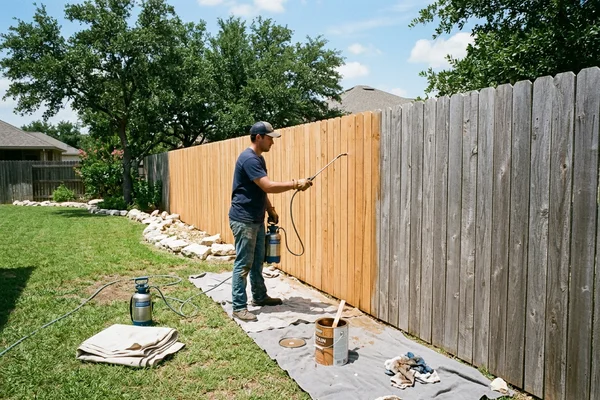
Bare wood grays quickly in the Hill Country sun, so we recommend staining once the new fence is dry enough to take it. Treated pine needs more drying time first, or the stain won't soak in. Our staining and sealing page has the details.
How Much Does a Wood Privacy Fence Cost in Boerne?
What most jobs around Boerne cost, installed.
What can raise or lower your price
- Rock Post holes that hit limestone get drilled, which takes longer.
- Slope Stepping or racking panels down a hill adds labor.
- Height and style 8 ft, board-on-board and cap-and-trim use more material.
- Gates and tear-out Each gate and every foot of old fence removed adds to the total.
Worked examples: 100 ft of 6 ft wood privacy fence runs $2,500 to $4,500. 150 ft runs $3,750 to $6,750. 200 ft runs $5,000 to $9,000.
Building a Wood Fence on Rock and Slope
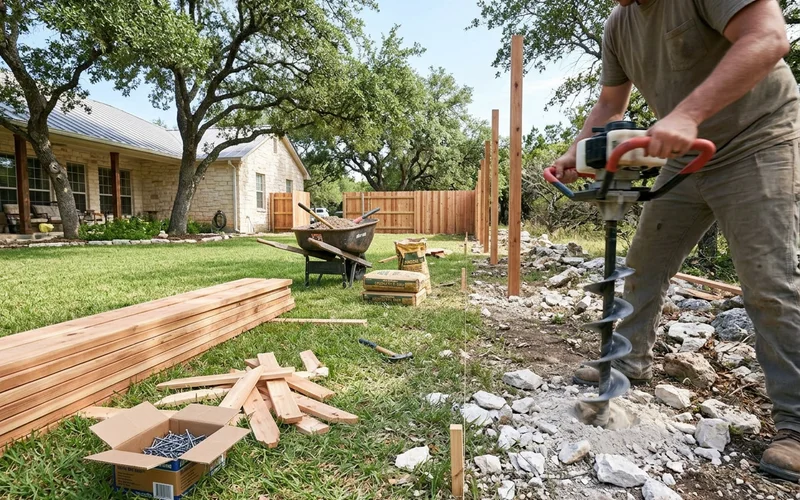
Most Boerne lots sit on shallow, stony soil over limestone. The post holes for a wood fence often hit rock, and that's where a lot of fences go wrong: the post gets set short, and a few windy seasons later the fence leans. We drill into the rock and set every post in concrete so the fence holds its line.
Hill Country lots also slope. On a grade, we either step the panels, keeping each one level with a drop between them, or rack the panels so the rails follow the ground. Stepping looks crisp on board-on-board and cap-and-trim. Racking keeps the bottom tight to the ground, which matters if you have a dog.
Wood Fence Styles We Build
Four styles cover almost every wood privacy fence we build.
Why Choose Boerne Fence for Your Wood Fence?
Posts that stay put
Posts drilled into the rock and set in concrete, not stopped short at the first stone.
Straight on slopes
Stepped or racked to suit your lot, so the top line looks right from the house and the street.
Prices up front
The estimate is free, with tear-out and gates listed separately.
Staining when you're ready
We can come back to clean, stain and seal the fence once the wood is ready to take it.
How a Wood Fence Build Works
- 01
Measure and plan
We come take a look with you, measure footage, mark gates and note rock, slope and trees. Inside Boerne city limits, we talk through the permit and site plan.
- 02
Free written estimate
A price for your height, style and footage, with tear-out and gates listed separately.
- 03
Tear-out and posts
We remove and haul off the old fence, then drill and set new posts in concrete along a pulled string line.
- 04
Rails, pickets, gates
Rails, kickboard and pickets go on with galvanized fasteners, gates are hung square, and the site is cleaned up.
Wood Fence Questions, Answered
How deep should fence posts go?
Most 6 ft fence posts go about 2 to 3 feet deep, with gate posts and 8 ft fences going deeper. On the stony uplands the hole often hits limestone, so we drill into the rock and set the post in concrete.
Do you need a permit for a wood fence in Boerne?
Yes, inside Boerne city limits. The City of Boerne requires a permit application with a site plan showing where the fence will go.
Can you replace a wood fence in Fair Oaks Ranch?
Yes. Fair Oaks Ranch issues its own fence permits, separate from Boerne, so a new fence or an addition needs a permit from the City of Fair Oaks Ranch before work starts.
Should I stain a new wood fence?
Yes, once the wood is dry enough to take stain. Staining slows graying and cracking in Hill Country sun.