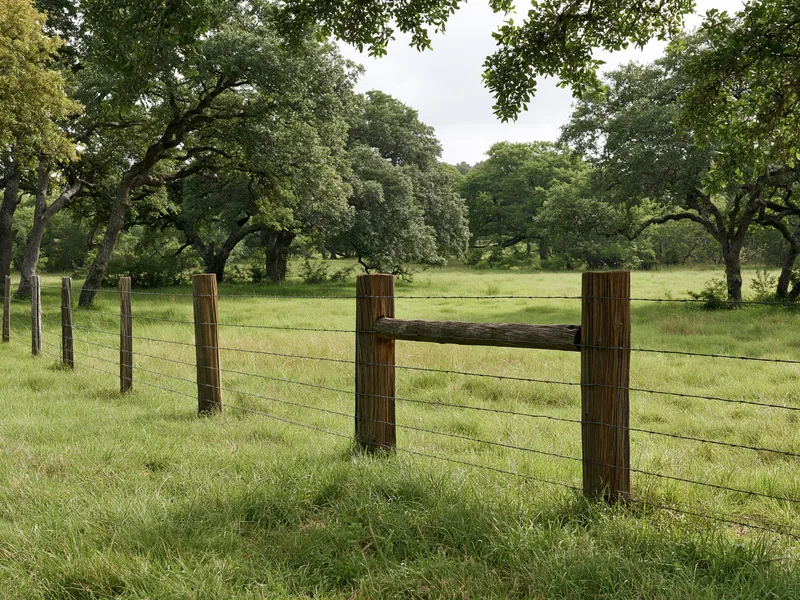
- Pipe top-rail with wire
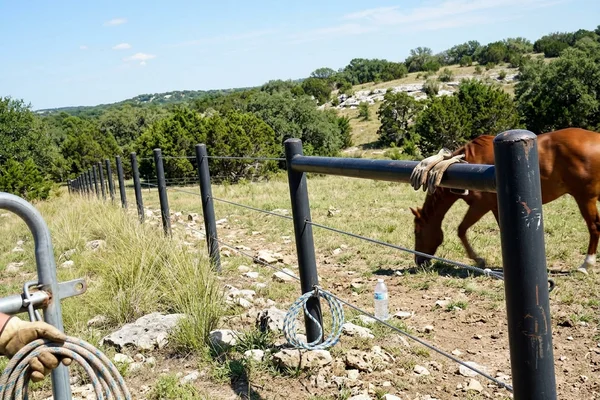
- Pipe and cable
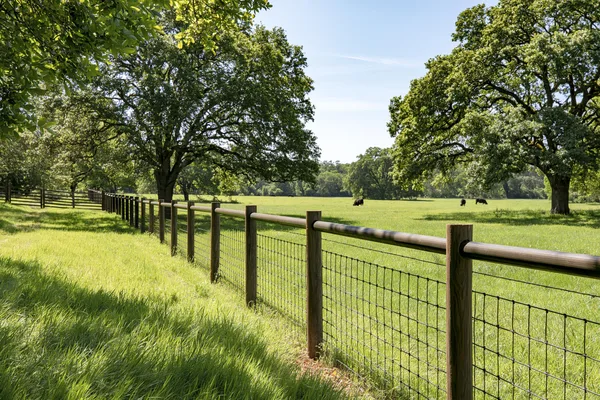
- Welded wire and barbed wire
- Cattle and horse fencing
- Ranch gates
What Kind of Ranch Fence Do You Need?
Ranch fence comes down to what it has to hold, how long you want it to last, and how much ground it covers. These are the four we build around Boerne.
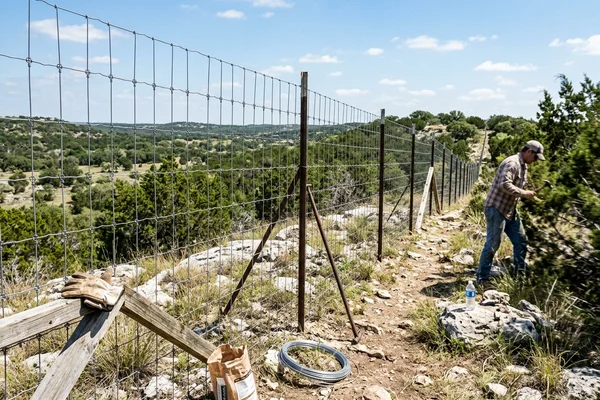
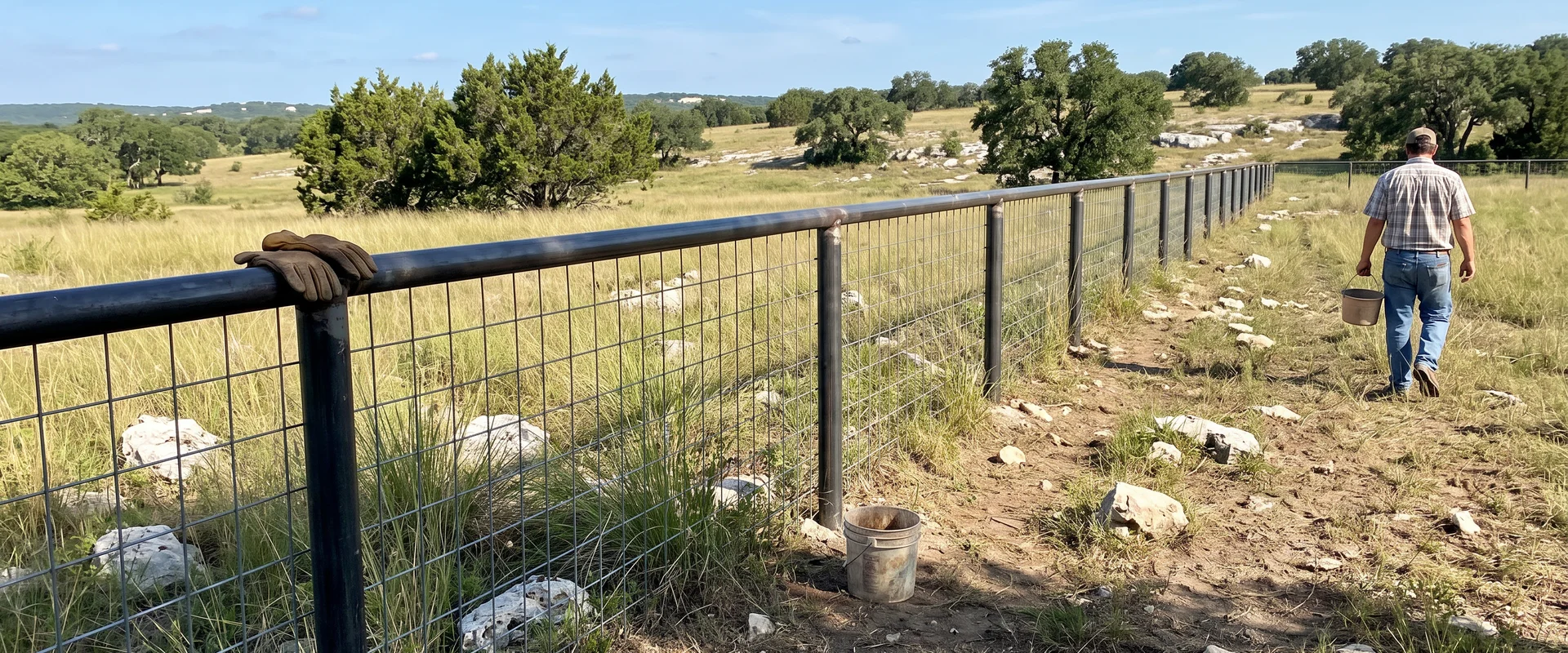
Pipe top rail with wire. A welded pipe top rail on pipe posts, with welded wire or woven field fence below. The pipe gives livestock something they can see, and it keeps the wire from sagging. It's the most common ranch fence you'll see around here.
Pipe and cable. Pipe posts with smooth steel cables stretched between them. It's strong, easy for horses to see, and there are no barbs, which is why it's a common choice for horse pastures and pens.
Welded wire. Wire mesh stretched between braced corners on T-posts or pipe line posts. Smaller openings hold goats, sheep, dogs and calves better than wide field fence.
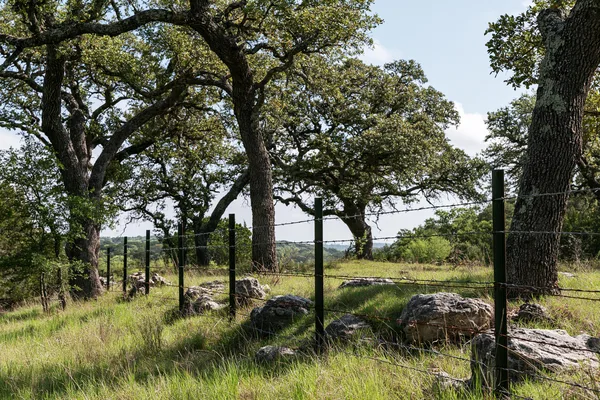
Barbed wire. Strands of barbed wire on steel T-posts, still a Texas standard. It usually costs the least per foot for big cattle pastures, but it's not a good choice around horses.
If you're starting from acreage rather than feet, our guide on what it costs to fence 10 acres shows how to turn one into the other.
Cattle Fence vs Horse Fence
Cattle lean on a fence to reach the grass on the other side. Horses are more likely to run into a fence, reach over it, or get a leg caught in it. That changes what we build.
- For cattle, barbed wire, welded wire or field fence with a pipe top rail all work well. What matters most is keeping the wire tight and the braces solid.
- For horses, we lean toward pipe and cable, or a pipe rail with small-opening welded wire so a hoof can't go through. No barbs, and a top rail they can see. Wide-opening field fence costs less, but it isn't a good idea where horses or foals are kept.
Gates on Ranch Land
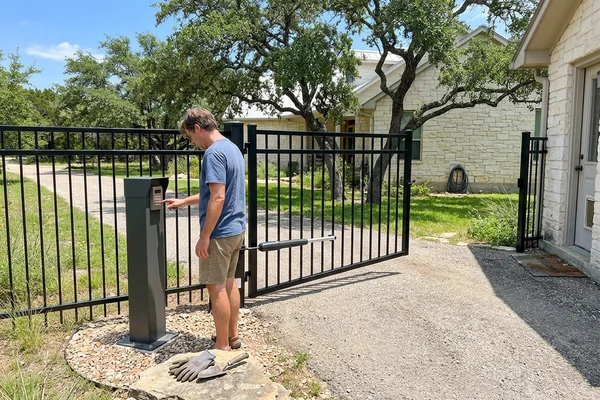
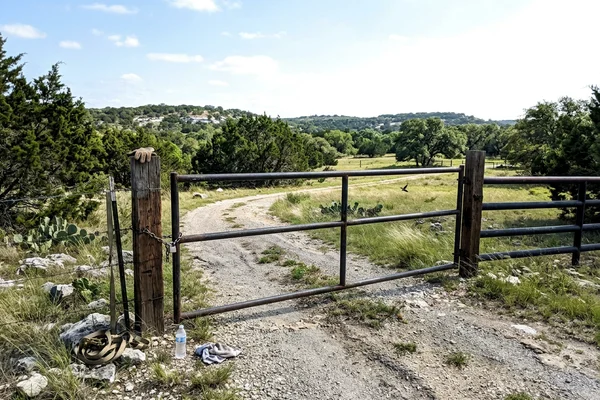
Ranch gates need to open wide enough for trucks, tractors and trailers. Tell us the biggest thing that has to come through, and we'll size the gate with room to spare. A heavy gate also needs a solid, braced post to hang on, or it will sag.
We build pipe ranch gates and wide double drive gates, and we can build an automatic gate into the fence line. Our driveway and automatic gates page covers openers and their prices.
Game Fence and Deer Fence
If you need to keep deer out of a garden or hold exotic game in a pasture, a pipe fence isn't the right tool. Deer jump a regular ranch fence without much trouble, so game fence goes much taller. Our deer and game fencing page covers everything from a garden enclosure to full acreage game fence.
Fixing Old Ranch Fence
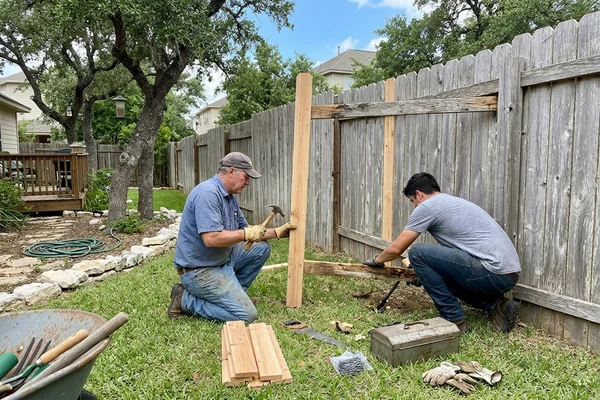
If you already have a ranch fence that's gone slack, it usually comes back to the braces. We repair broken braces, stretch sagging wire tight again, and swap rotted wood posts for steel, on acreage out toward Comfort and Sisterdale too. Our fence repair page has more.
How Much Does Pipe Fence Cost Around Boerne?
What most jobs around Boerne cost, installed.
What can raise or lower your price
- Height and rails More rails or cables and taller posts use more pipe.
- Wire type Welded wire, field fence or barbed wire under the rail.
- Rock Corner and brace posts drilled into limestone.
- Slope and brush Steep ground and brush on the line slow the work.
Worked examples: A square 10-acre tract has about 2,640 ft of perimeter. In pipe fence, that's roughly $52,800 to $118,800 before gates.
Ranch Fence on Stony Uplands and Clay Bottoms
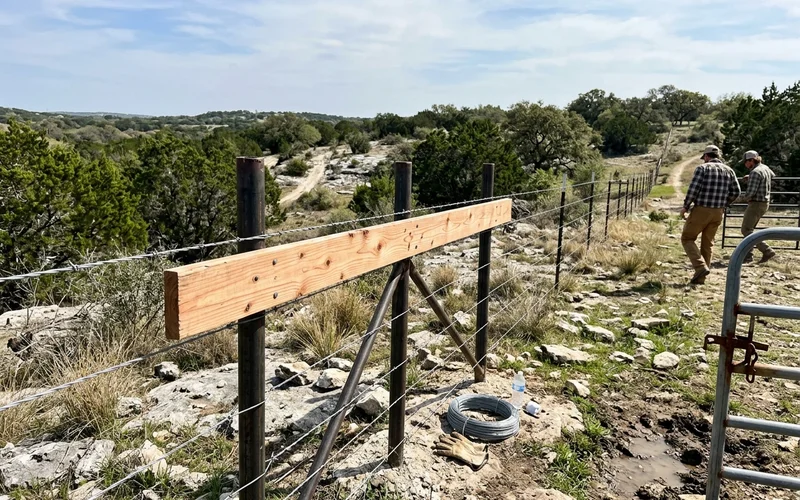
A wire fence is only as strong as its corners. All the tension of a stretched run ends up on the corner post and its H-brace, so if a brace shifts, the whole line goes slack. On Kendall County's stony uplands, we drill corner and brace posts into the limestone and set them in concrete before a single strand goes up.
Lower ground near creeks is often loamy clay, which heaves with wet and dry spells. Posts there need depth and good concrete, or they'll walk out of line. Long runs across both kinds of ground are common from Comfort to Sisterdale, and we set each post for what it's standing in.
Ranch Fence Types We Build
The right fence depends on your stock, your ground and your budget.
Why Choose Boerne Fence for Ranch Fencing?
Braces that hold
Corners and braces set in the rock first, so long runs stay tight.
Built for your stock
Horse fence and cattle fence aren't the same. We'll match the fence to the animals it has to hold.
Gates where you need them
Ranch gates, drive gates and automatic entries built into the same job.
Prices per foot
Pipe or wire, you'll see the price per foot before anything goes in. The estimate is free.
How a Ranch Fence Job Works
- 01
We look at the fence line with you
We walk or drive the fence line with you, note corners, gates, brush, rock and low spots, and talk about your stock.
- 02
Pick the fence type
Pipe rail, pipe and cable, welded wire or barbed wire, priced per foot.
- 03
Corners and braces first
Corner posts and H-braces are drilled into rock and set in concrete, then line posts go in.
- 04
Rail, wire and gates
Pipe is welded, wire is stretched and tied off, gates are hung, and the line is walked one more time.
Pipe and Ranch Fence Questions, Answered
What is the cheapest fence for cattle?
Barbed wire is usually the cheapest to put up. Welded wire and pipe and cable cost more but need less upkeep, and every type depends on solid corners and bracing.
What is an H-brace?
An H-brace is two posts joined by a horizontal brace and tensioned with wire. It sits at corners, gates and ends to hold the pull of a stretched fence. Weak braces are the most common reason ranch fence goes slack.
Can you add a gate to an existing ranch fence?
Yes, a double drive gate or an automatic driveway gate. Like a corner, a gate needs a solid brace to hold the pull of the stretched fence.
Do you clear the fence line?
A fence needs a clear line to go in straight. We'll talk through brush and cedar on the line during the estimate so you know what's included.