
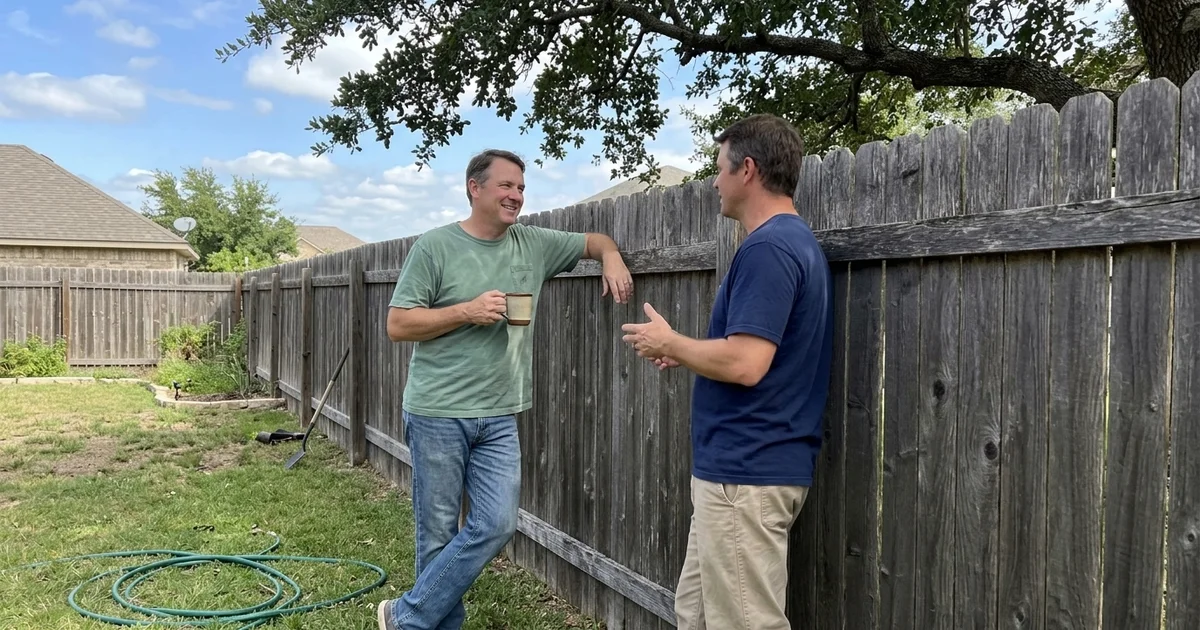
A fence between two yards belongs to somebody, and when it needs work, the question of who pays comes up fast. Here's what Texas fence law between neighbors actually says, which isn't much, and how most people sort it out.
Does Texas Have a Good-Neighbor Fence Law?
No. Texas has no good-neighbor fence law that makes neighbors split the cost of a fence between homes. The Texas State Law Library puts it plainly: a landowner generally has no legal obligation to share the cost or upkeep of a fence a neighbor builds, unless the two of them agreed to it.
Some states do have cost-sharing laws. Texas leaves it to the neighbors. If your neighbor pays half, it's because you both agreed to that, and a written agreement is the only way to make it stick.
This is general information, not legal advice.
Under Texas Fence Law Between Neighbors, Who Owns the Fence Between Two Houses?
Under Texas fence law between neighbors, a fence generally belongs to the owner whose land it sits on. If the posts are a few inches inside your property line, it's usually your fence, even if your neighbor enjoys the privacy just as much. A few things can change that:
- A written agreement between neighbors about who owns and maintains the structure.
- Deed restrictions attached to the property that outline boundary responsibilities.
- HOA rules. Your HOA's rules can set how fences between lots are built and kept up.
If the fence sits right on the property line and nobody's sure who owns the fence, get a survey and talk it through before anyone spends money.
Why a Survey Matters
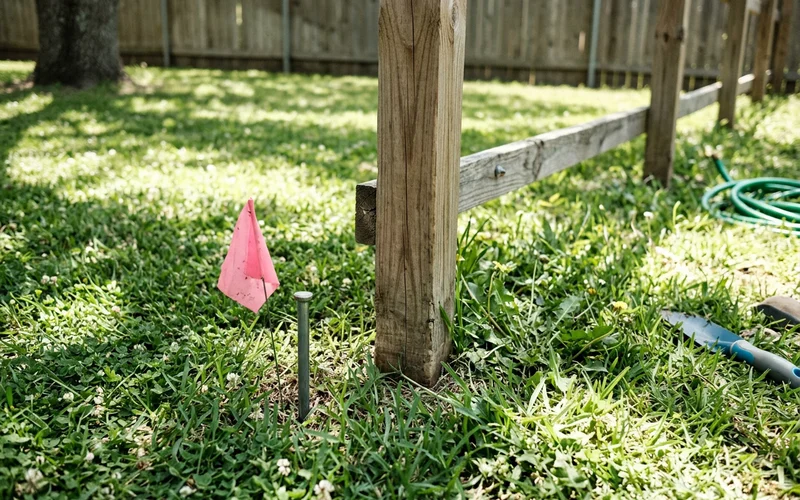
Old fences often aren't exactly on the property line. They drift a little with each rebuild, or they were set by eye years ago. A boundary survey on a typical home lot usually runs about $400 to $1,000, and it's cheap next to tearing out a new fence that went up in the wrong place.
Look for survey pins, the metal stakes buried at the corners of the lot. If you can't find them, a Registered Professional Land Surveyor (RPLS) can locate or reset them.
We'll set the posts where you tell us to. Knowing the property line first is what keeps that from turning into a dispute later.
How to Handle a Shared Fence With a Neighbor
Most fence trouble between neighbors comes down to talking. Go look at the fence together and agree on what it needs. A real price makes that easier: a 6 ft wood privacy fence runs $25 to $45 per foot installed, and our guide on fence cost per foot covers every common type.
If only a post or two has failed, a repair may be all it needs. Our guide on whether to repair or replace a fence walks through the signs.
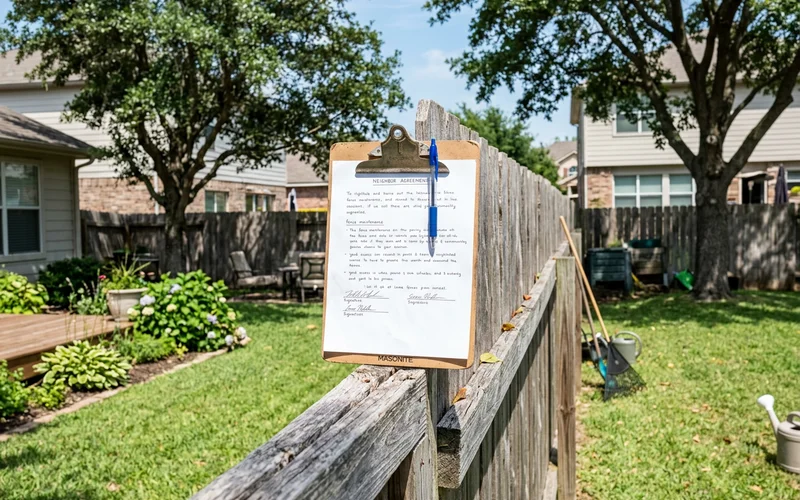
Then put it in writing. A simple signed page that says who pays what, who owns the fence and who keeps it up saves a lot of trouble later, especially if one of the houses sells.
| Situation | What usually applies | What to do |
|---|---|---|
| Fence fully on your land | Generally your fence | Build, repair or replace as you see fit, within HOA rules |
| Fence on neighbor’s land | Generally their fence | Talk to them before changing it |
| Fence right on the line | Unclear without records | Get a survey, then agree in writing |
| HOA neighborhood | HOA rules can control style and upkeep | Read the rules before building |
Which Side Faces Out?
The finished side usually faces the street or the neighbor, and many HOAs require it. If there's no rule, it's a matter of courtesy, and most people give the neighbor the good side.
HOAs can set a lot of fence rules, but not all of them. Under Texas Property Code §202.023, an HOA generally can't ban a perimeter fence put up for security, though it can still regulate what kind of fence it is.
Board-on-board sidesteps the question entirely. It looks finished on both sides.
When a Shared Fence Gets Damaged
Storms and falling limbs don't care whose fence it is. When a shared fence gets damaged, who owns the fence still generally comes down to the land it sits on. Most neighbors sort it out by talking, and a few steps make that easier:
- Document the damage with clear photos before anyone moves the debris.
- Figure out the cause. A limb from a neighbor's dead tree is a different conversation than a fence that rotted from age. If it turns into a question of who's responsible, that's one for your insurance company or a lawyer.
- Get one estimate you can both see. This keeps the discussion focused on real numbers. Most standard repair jobs run $300 to $900, while a totally fallen section runs $300 to $1,500.
- Agree on the exact fix before work starts, and write it down if you plan to split the final invoice.
Replacing a shared fence
If the whole fence is due, it's a good time to confirm the line with a survey and agree on the new style and height together. Board-on-board, at $35 to $60 per foot, looks finished on both sides, so nobody gets the back of the fence.
Permits Still Apply
Whoever pays, the city rules still apply. Inside Boerne city limits, a new fence needs a permit application and a site plan showing where the fence will go. If you're in an HOA, you'll usually need its approval too. Fair Oaks Ranch runs its own permits for new fences and additions. Our fence permit guide covers both cities.
The Short Version: Texas Fence Law Between Neighbors
Texas fence law between neighbors doesn't require anyone to split the cost of a fence. Ownership generally follows the land the fence sits on. If the line is unclear, a survey, usually about $400 to $1,000, settles it. Check your HOA rules, and put any cost-sharing deal in writing.
This is general information, not legal advice. For a real dispute, talk to a Texas real estate attorney.