
How Deep Should Fence Posts Be?
Most 6 ft wood privacy fence posts go 24 to 36 inches deep, set in concrete. An 8 ft fence goes deeper, 36 to 48 inches, because the taller fence catches more wind. Around the Texas Hill Country, the posts that fail early are usually the ones set too shallow.
Here's the typical fence post depth by fence type:
| Fence type | Typical post depth | Notes |
|---|---|---|
| 6 ft wood privacy | 24 to 36 inches | Line posts; set in concrete |
| 8 ft wood privacy | 36 to 48 inches | Taller fence catches more wind |
| Gate posts | 36+ inches | Carry the gate's weight every time it swings |
| Chain link terminal posts | 30+ inches | Hold the tension of the whole run |
| Ranch corners and H-braces | Deepest on the line | Hold the pull of stretched wire |
Why Depth Matters So Much
A fence post works like a lever. A solid privacy fence catches wind like a sail, and the part of the post in the ground is what holds against that push. A shallow post holds for a while, then slowly starts to lean, and a leaning post pulls on the sections next to it. Around Boerne, the ground decides how hard it is to get the depth you need, in rock or in clay.
Two Kinds of Ground Around Boerne
Around Boerne there are two kinds of ground, and they need different work. Up high, it's thin, stony soil over limestone. Down by the creeks, it's deeper clay.
Stony uplands over limestone
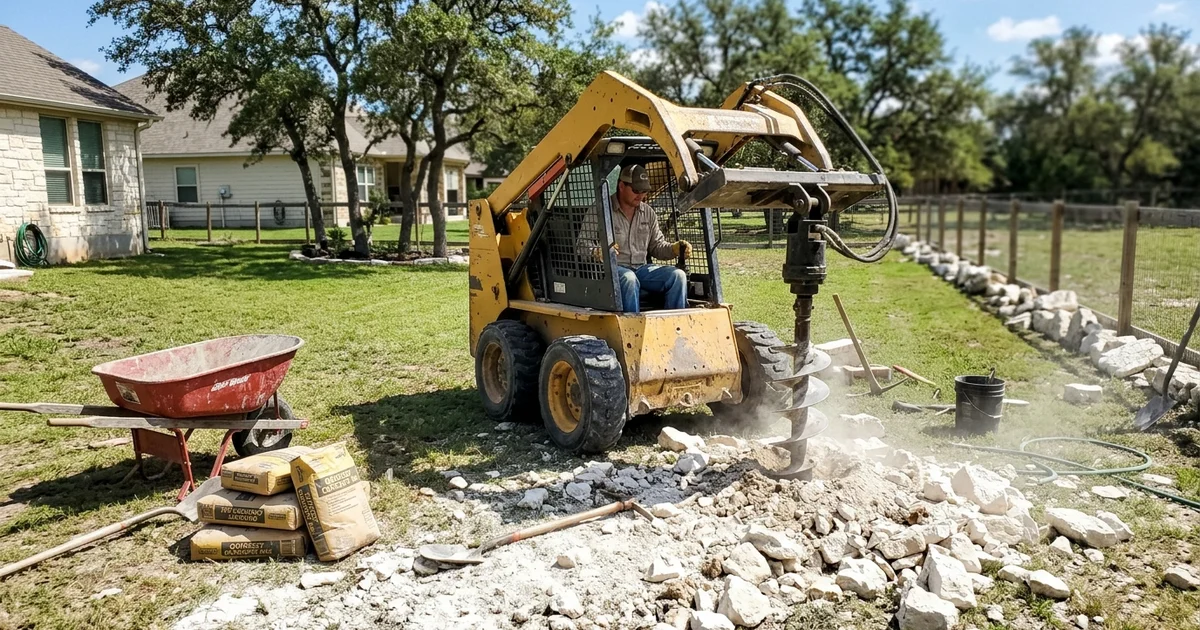
On the uplands, a post hole often hits Edwards Plateau limestone, the rock under much of the Texas Hill Country, not far below the surface. That's where a lot of old fences were stopped short, because the installer hit rock and quit. Getting the right fence post depth in rock means drilling into the limestone with a rock auger until the hole reaches full depth, then setting the post in concrete.
Loamy clay on the creek terraces
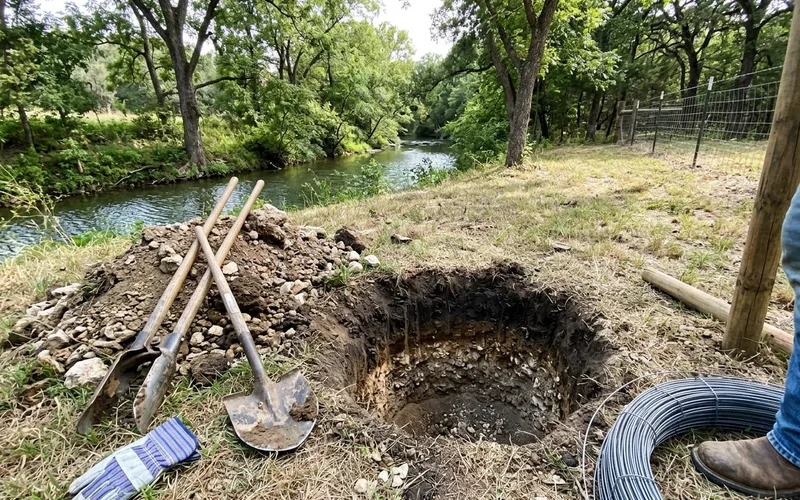
Down on the creek terraces, the ground is deeper, loamy clay. Clay swells when it's wet and shrinks when it dries, and over time that movement can push shallow posts out of line. Here, full depth and a solid concrete footing matter even more.
How We Set a Post in Rock
Getting through rock takes a rock auger, not a post-hole digger.
We mark the line with string so the posts run straight.
When the auger hits limestone, we switch to a rock bit and keep drilling.
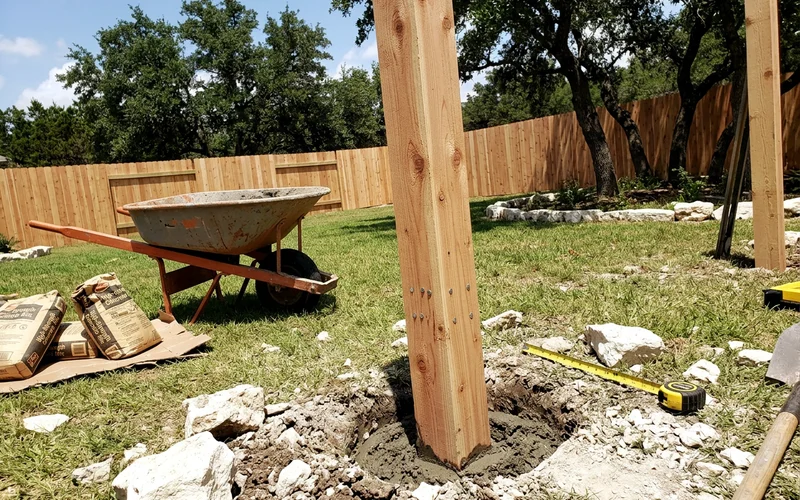
We measure each hole to make sure it's deep enough.
We set the post plumb in fresh concrete.
We crown the top of the concrete so rain runs off, and let it set.
Why rock raises the price
Drilling limestone takes longer and wears out bits. That's one reason rock sits on the list with slope, height and gates as the things that decide where an estimate lands.
What About Leaning Posts You Already Have?
A fence that's already leaning usually has posts that were set too shallow, often because the hole hit rock, or that rotted at the ground line. Either way, the fix is the same: dig out the old post and its concrete, drill a deeper hole, and set a new post in fresh concrete. Replacing a single post runs $250 to $500. Our fence repair page has more.
Gate Posts and Corner Posts Need More
Gate, corner and end posts carry more than the posts in between. A line post just holds the fence up. A gate post carries the gate's weight every time it swings, and a corner on a ranch fence holds the pull of all the stretched wire. That's why we use heavier posts at gates, 6x6 wood or steel, and brace ranch corners with an H-brace.
A line post that's a little short might hang on. A gate post that's too shallow will sag. On rocky Hill Country lots, getting the depth right at the gates and corners matters most.
Building a New Fence?
If you're planning a new wood privacy fence and getting bids, ask each contractor how deep they set posts and what they do when the hole hits rock. The answer tells you a lot about how straight the fence will be a few years from now. If the line runs under big trees, read about building a fence near live oaks and the oak wilt rules in Boerne before the first hole goes in.