
The Short Answer
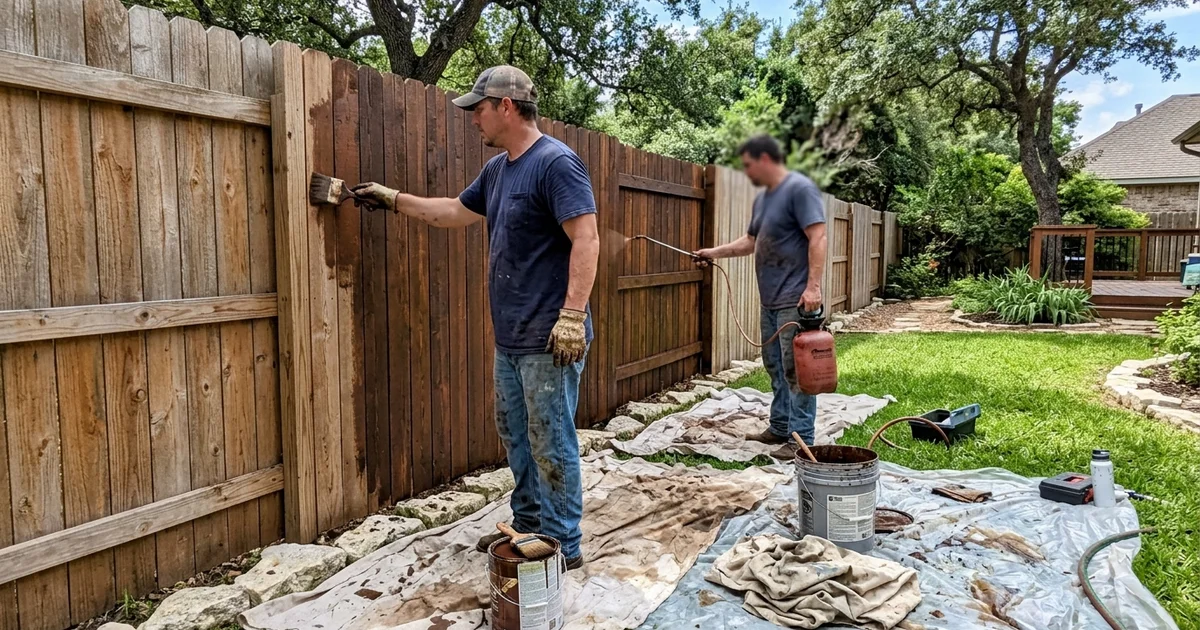
Is fence staining worth it? For most wood fences, yes. Cleaning and staining a 6 ft fence runs $3 to $8 per foot for one side.
That's the whole case for fence staining and sealing. You spend a little now to slow the graying, cracking and rot that would otherwise have you paying $25 to $45 per foot for a new fence sooner. In Texas Hill Country sun, bare wood doesn't stay good-looking for long.
What Staining Costs
The fence staining cost depends on how much fence you have and what shape the wood is in. Staining is priced by the foot, one side at a time. Here's how it compares with building new:
| Job | Price |
|---|---|
| Staining, 6 ft fence cleaned and stained one side | $3 to $8 per foot |
| New 6 ft wood privacy fence, for comparison | $25 to $45 per foot |
| Tearing out an old fence | $3 to $6 per foot |
A worked example
Take 150 ft of 6 ft wood privacy fence, a common size for a backyard in Boerne.
- Stain one side: about $450 to $1,200
- Stain both sides: roughly double, since price is per side
- Replace the fence: $3,750 to $6,750, plus $450 to $900 to tear out the old one
Staining costs a small part of what replacing does. If it buys the fence even a few more good years, it has paid for itself.
What Bare Wood Goes Through
Here's what Hill Country sun does to a bare wood fence:
- UV graying starts within months. The sun breaks down the surface fibers and turns them gray and fuzzy.
- Moisture cycling follows. Rain soaks into the dried-out surface, the wood swells, then dries and shrinks.
- Cracking and cupping set in. Picket ends split, boards cup and twist, and fasteners loosen.
- Rot gets a foothold where water sits, especially near the ground and on rails.
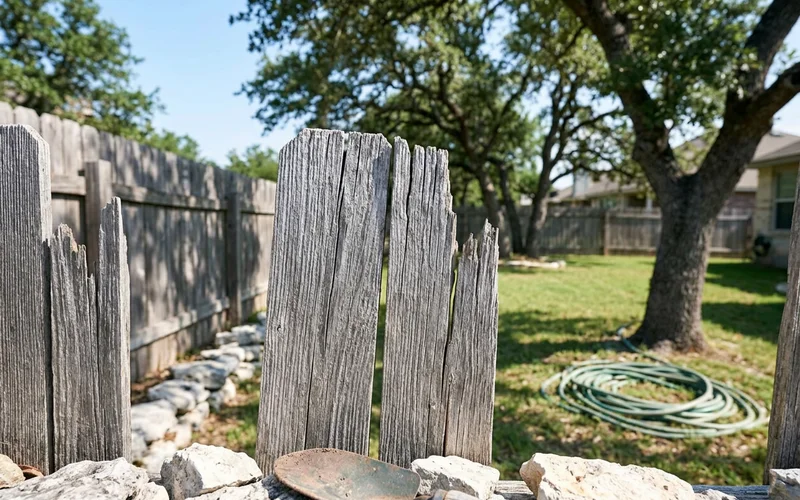
A penetrating oil stain blocks much of the UV and makes water bead up and run off instead of soaking in. That slows down every step on that list.
When Is Fence Staining Worth It?
Staining is worth it most in three cases:
- New fences, once the wood has dried out enough to take stain. How long that takes depends on the wood and the weather.
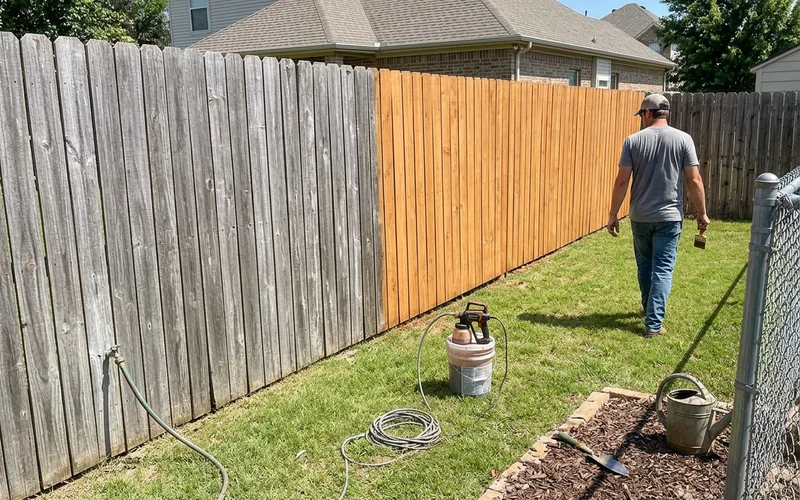
- Fences that have grayed but are still solid. Cleaning and brightening takes off the gray, and stain protects what’s underneath.
- Fences you plan to keep a while. The longer you'll live with the fence, the more each coat pays off.
When It Isn’t
Stain won't save a fence that's falling apart. If the posts are leaning or rotted, deal with that first, either with a repair or, if the rot has spread, a replacement. Our guide on when to repair or replace covers how to decide.
- Posts are rotting or leaning. Shifting Texas clay soil loosens foundations.
- Many pickets are split or broken. Swap them first, then stain.
- The fence is coming out soon anyway. No point protecting wood you are about to tear out.
Does the Type of Wood Matter?
We build with both cedar and pine, and both are worth staining. Cedar has natural oils that help it resist rot and insects, but it still grays in the sun. Treated pine costs less and moves more as it dries. Cedar is usually ready for stain sooner after it goes up. Treated pine needs more drying time first.
Our guide on cedar vs pine covers how each one handles Texas sun.
How Often to Restain
Use the water test. Splash a little water on a few boards. If it beads up, the stain is still working. If it soaks in and darkens the wood, it's time for a new coat.
How often that comes depends on your yard. A fence in full Texas sun needs it sooner than one in shade. For a semi-transparent stain, it's usually every few years.
Doing It Right Matters More Than the Stain
Most fence staining jobs that fail skipped the prep. The wood has to be cleaned and brightened first so the stain can soak in. Without that, the stain sits on top and peels. Then it gets sprayed on and back-brushed into the grain right away, with plants, siding and cars covered against overspray. Skip any of those steps and the stain won't last, no matter how good the stain was.
Stain Colors and Finishes
Fence stains come in three kinds, and the one you pick changes both the look and how often you'll restain:
- Clear or toner finishes let the natural wood color show and give the least UV protection.
- Semi-transparent stains add color while letting the grain show through. They balance looks with protection.
- Solid stains look more like paint and hide the grain. They block more sun but can peel like paint when they wear.
For most Hill Country fences, semi-transparent is the sweet spot. It protects well, weathers evenly, and doesn't peel the way a solid stain can. A good penetrating oil-based stain holds up best in Texas heat.
Staining after a repair
New boards from a repair look brighter than the old ones at first. Cleaning and staining the whole fence, once the new wood has dried out, evens out the color.
The Bottom Line
At $3 to $8 per foot per side, staining is one of the cheapest things you can do for a wood fence, and on a sound fence it's worth it. If the posts are rotting, fix those first.
If you're still not sure fence staining is worth it for your fence, we'll come out, look at the wood, and give you a free estimate. Around Boerne, that usually starts with the water test.